
Med Standards
KP Apps, LLCMedical
4.220.00 Reviews
- Version
- 2.1.1
- Installs
- 10.00K
- Age Rating
- Everyone
Screenshots
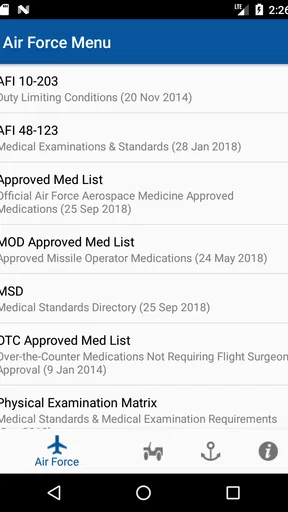
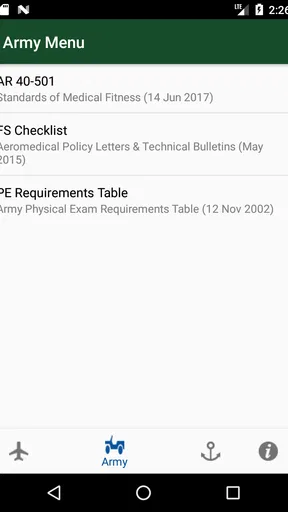
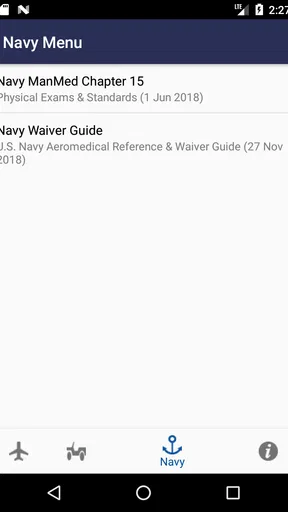
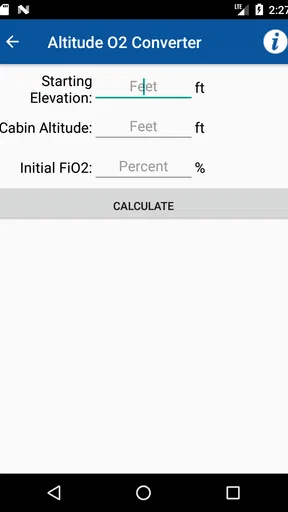
Our Review of Med Standards
 Analysis by Appyee
When a medical decision depends on a military standard, the difficult part is often not finding a definition. It is finding the right standard quickly, understanding what it is actually asking, and passing that information to the person who needs it without mixing up branches or requirements. That is the situation I had in mind while using Med Standards, a free medical reference app from KP Apps, LLC.
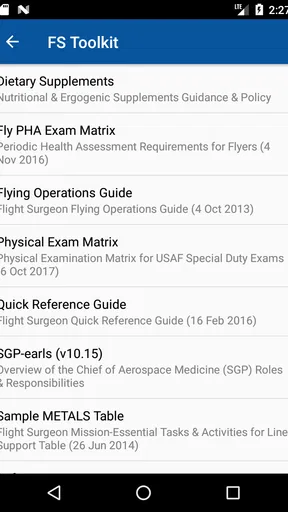
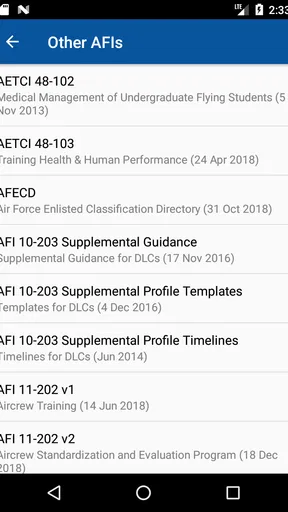
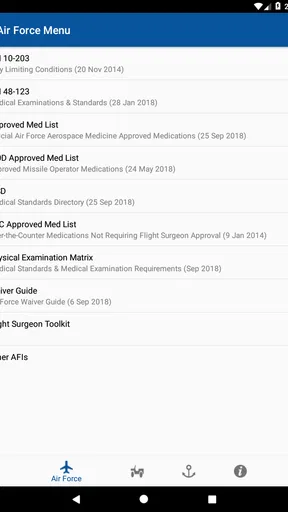
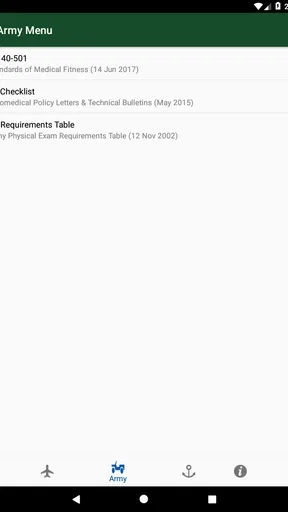
The app focuses on medical standards for the Army, Navy, and Air Force. That narrow purpose is its main appeal: instead of treating military medical guidance as a broad web search, it gives the subject its own compact place on a phone. I found it most useful as a quick reference during an initial check, a conversation with a recruiter, or a preparation session before seeking an official medical opinion.
It is not a diagnostic tool, and I would not use it as a substitute for a military medical examination. Its value is more practical than clinical. It helps turn a vague question such as “Could this condition matter?” into a more organized question about which branch’s standard needs to be checked and what information should be carried into the next conversation.
Following a military medical question from first concern to next step
I start with the concern that prompted the lookup, then narrow it to the relevant branch and the wording that needs attention. That keeps a quick reference from turning into a premature yes-or-no judgment. Next, I look at how to carry that question into a useful conversation with someone who can interpret the individual case.
Starting with the right question
The best way to use this app is to begin with a specific concern rather than browsing randomly. A user might be preparing for enlistment, reviewing a past condition, checking how a documented issue may be treated, or helping a family member understand what to ask next. That starting point matters because military medical standards are not the same thing as general health advice.
I would first write down the condition or history in plain language: what happened, when it happened, whether treatment was needed, whether symptoms remain, and what documents exist. The app can then serve as a reference point while I compare that description with the relevant standard. This simple preparation prevents a common mistake: searching for a label without understanding the details that may affect how the case is reviewed.
The app’s subject is especially suited to users who need a fast orientation. Someone who has never dealt with military medical terminology may not know whether to start with a branch-specific requirement, a general medical category, or a recruiter’s question. Having Army, Navy, and Air Force standards gathered around one purpose makes the first pass less intimidating than opening several unrelated browser results.
At the same time, I would keep expectations controlled. A reference app cannot decide whether an individual is qualified. Real cases may depend on medical records, current symptoms, treatment history, examination findings, and the judgment of authorized personnel. The useful outcome here is a better-informed next question, not a personal clearance.
Moving through the reference step by step
My preferred workflow is deliberately slow at the beginning and fast afterward. I identify the branch involved, locate the relevant medical topic, and read the surrounding wording instead of stopping at the first phrase that appears to match. Standards are easy to misread when a user searches only for a familiar condition name.
A practical habit is to compare the wording with the person’s actual history in a small set of notes. I would record the matching topic, any terms that seem unclear, and the documents that might support the explanation. This turns the app from a passive reading tool into part of a preparation process. It also makes a later handoff much cleaner because the next person receives a focused question rather than a screenshot with no context.
Another useful approach is to read for distinctions. A past condition may not be the same as an active condition. A procedure may matter differently from a symptom. A resolved issue may still require documentation. I would not assume that a reassuring sentence settles the case, just as I would not assume that a concerning phrase automatically means rejection. The app is most valuable when it helps me notice what needs clarification.
For that reason, I would avoid making a decision after one quick glance. The convenient format encourages speed, but speed can work against accuracy in medical reference material. My advice is to read the applicable passage twice, note the exact question it raises, and then confirm the interpretation through an official channel or qualified medical professional.
Preparing the handoff to a recruiter or medical professional
The handoff is where this app can provide more value than a normal web search. A recruiter, doctor, or authorized military medical reviewer usually needs a clear history, not just a claim that an app appeared to support an answer. I would use the reference to prepare a short summary: the condition, relevant dates, treatment, present status, and the specific standard or wording that caused uncertainty.
This workflow reduces unnecessary back-and-forth. Instead of saying, “I found something online and I think I am fine,” I could ask, “This section appears to address my history; which records or evaluation should I provide?” That is a much more useful conversation. The app does not replace the handoff; it helps make the handoff more precise.
It is also important to separate personal medical privacy from convenience. I would not send sensitive information casually or assume that showing a passage on a phone is equivalent to submitting official documentation. The app can help organize what to ask, but the formal process still belongs with the relevant service and medical authorities.
For parents, mentors, or friends helping someone prepare, the same principle applies. I would use the app to understand the vocabulary and identify questions, while allowing the applicant to present their own medical history accurately. Guessing on someone else’s behalf is risky, especially when a small detail can change how a standard is interpreted.
What the result looks like in everyday use
A realistic example would be a person preparing for a recruiting appointment after having a medical issue several years earlier. Before the appointment, I would open the app, check the relevant branch, review the section connected to that history, and write down the terms I do not understand. I would then gather available records and bring a concise question to the recruiter or medical provider.
The result is not an instant yes or no. The result is a more organized appointment. The user arrives knowing which topic prompted concern, what history needs to be explained, and which part of the standard requires confirmation. That is a modest result, but it can save time and prevent the false confidence that often comes from a casual internet search.
I can also see value in using it before a family discussion. Military medical requirements can sound confusing when repeated from memory, and people may unintentionally blend standards from different branches. Checking the relevant branch before discussing the issue helps keep the conversation grounded. I would still treat the app as a starting reference, not as the final authority.
The app’s free price lowers the barrier for someone who needs this kind of occasional reference. Its Everyone content rating also makes it broadly approachable, although the subject itself is more relevant to applicants, service members, advisers, and families than to casual general-health users. With over ten thousand installs and an average rating of 4.2 from dozens of ratings, it has found a modest audience rather than presenting itself as a universal medical application.
Where the workflow becomes less comfortable
The narrow focus is both the strength and the main limitation. If I want symptom tracking, medication reminders, appointment management, general health education, or a way to speak with a clinician, this is not the right category of app. A general medical reference or an official service resource may be a better choice depending on the question.
I would also be cautious whenever the wording feels incomplete or difficult to apply. Military standards can involve context that a short mobile reference cannot fully explain. If the app helps me find a relevant passage but does not make the personal situation obvious, that is not a failure to be solved by guessing. It is the point where the workflow should pause and move to an official review.
Another friction point is the risk of treating branch coverage as interchangeable. The presence of Army, Navy, and Air Force material does not mean that one branch’s interpretation can be transferred automatically to another. I would always identify the intended branch before drawing conclusions, and I would not use a familiar result from one section to answer a question about another.
The current version is 2.1.1, and the app requires Android 8.0 or later. That makes device compatibility a practical consideration before relying on it for an appointment or travel situation. I would install and open it in advance rather than waiting until I need an answer immediately. A reference tool is only useful in the moment if it is already available and familiar.
Because the app is a reference rather than a formal submission system, I would not expect it to manage the entire process from research to decision. It does not remove the need to collect records, describe history accurately, or follow instructions from authorized personnel. Its role is earlier in the chain: orienting the user and improving the quality of the next conversation.
How it compares with the usual alternatives
The usual alternative is a web search. Search engines are broader and may provide more current context, official documents, discussions, and explanations, but they also mix branches, unofficial interpretations, outdated pages, and unrelated medical content. Med Standards is more focused, which makes it faster for an initial lookup, while official sources remain preferable when the exact current rule or formal procedure matters.
A general medical app is useful for symptoms, conditions, and patient education, but it may not be organized around military eligibility standards. I would choose a general medical resource when my question is “What does this symptom mean?” I would choose this app when my question is “Which military medical standard should I examine before asking for an official determination?” Those are different jobs.
Speaking directly with a recruiter or medical professional is the strongest alternative for an individual decision. It is slower and may require records or an appointment, but it is the proper route when the answer affects eligibility. My preferred combination is therefore simple: use the app to prepare, use official personnel to confirm, and use medical professionals for personal clinical interpretation.
One non-obvious advantage of this sequence is that it helps prevent wasted effort. A user who arrives with a precise question and organized history may be better prepared than someone who arrives with a long list of unfiltered search results. The app does not create authority, but it can improve the quality of the information carried into an authoritative process.
Who should use it, and who should skip it
I would recommend it to prospective applicants, people reviewing a past medical history before contacting a branch, and advisers who need a compact first reference. It is also useful for anyone who wants to understand the vocabulary well enough to ask a better question without pretending to make the final decision.
I would skip it if I needed immediate medical advice, diagnosis, emergency guidance, or a complete application workflow. I would also skip relying on it alone if the case is complicated, the wording is unclear, or the outcome has significant personal consequences. In those situations, the app may still help prepare notes, but it should not be the last step.
My strongest practical tip is to use it before a conversation, not instead of one. Read the relevant material, write down the exact uncertainty, gather supporting records, and ask an official or qualified professional to interpret the case. That four-part workflow respects both the usefulness and the limits of a mobile reference.
My final view: Med Standards is best as a focused preparation tool, not a personal eligibility verdict. KP Apps, LLC has kept the purpose clear, and the free format makes it easy to try. I like it for reducing the first layer of confusion around Army, Navy, and Air Force medical standards, especially when I need a starting point on a phone rather than a scattered search page.
Still, the responsible way to use it is to stop at the right moment. When the reference leads to a question about an individual case, the next step should be a recruiter, official military medical channel, or qualified healthcare professional. Used that way, this small medical app can make preparation more organized without encouraging the dangerous mistake of treating reference material as a final medical decision.
Verdict
Strengths of Med Standards
- Clear reference for common medical standards and terminology
- Useful for students, clinicians, and healthcare support staff
- Information is organized for quick consultation
- Can support consistent decision-making in clinical settings
- Helpful educational resource for reviewing medical concepts
Limitations of Med Standards
- Content may require regular updates as standards and guidelines change
- Not a substitute for professional medical advice or clinical judgment
- Some topics may be too technical for general users
- Coverage may vary across specialties and healthcare systems
- Offline access and full features may depend on the app version
Similar Picks in This Category
View All
WebMD: Symptom Checker
WebMD, LLC4.1

Microphone Amplifier
DOSA Apps4.2

Anatomy Learning - 3D Anatomy
3D Medical OU4.5

Period Tracker and Calendar
SimpleInnovation4.9

GoodRx: Prescription Coupons
GoodRx4.8

CVS Health
CVS Pharmacy4.5
Frequently Asked Questions
What is Med Standards, and who is it designed for?
Med Standards is a medical reference application created to help healthcare professionals, students, and other users quickly consult clinical standards, guidelines, and healthcare-related information. It may be useful for reviewing recommendations during study or professional preparation, but it should not be treated as a replacement for formal medical training, institutional protocols, or advice from a qualified healthcare professional.
What type of medical information can I find in Med Standards?
The application generally focuses on organized medical standards and reference material that can make it easier to review procedures, recommendations, classifications, or clinical guidance in one place. The exact topics and depth may depend on the app version and available content. Before relying on any entry, users should check its source, publication date, and whether it applies to their country or healthcare system.
Can Med Standards be used to diagnose or treat a patient?
Med Standards should be used as a reference and educational tool, not as an independent diagnostic or treatment system. Medical decisions require a complete assessment of the patient, including symptoms, history, examination, and sometimes laboratory or imaging results. Always confirm information with current official guidelines and consult a licensed healthcare professional before taking action.
Does Med Standards work offline, or does it require an internet connection?
Offline availability can vary according to the specific version, device, and content included by the developer. Some reference sections may be accessible after installation, while updates, searches, external links, or newly published standards may require an internet connection. It is worth opening the app before clinical use to confirm which materials remain available without connectivity.
How reliable and up to date is the information in Med Standards?
The usefulness of Med Standards depends on the quality, authority, and update frequency of the material provided by its developer or content sources. Medical recommendations can change as evidence and regulations evolve, so users should verify important information against current national guidelines, professional organizations, and local policies. The app should support professional judgment rather than replace it.
